Behind the Mic
The Team
Two conductors, educators, and lifelong learners who believe great professional development should be accessible to every music educator.
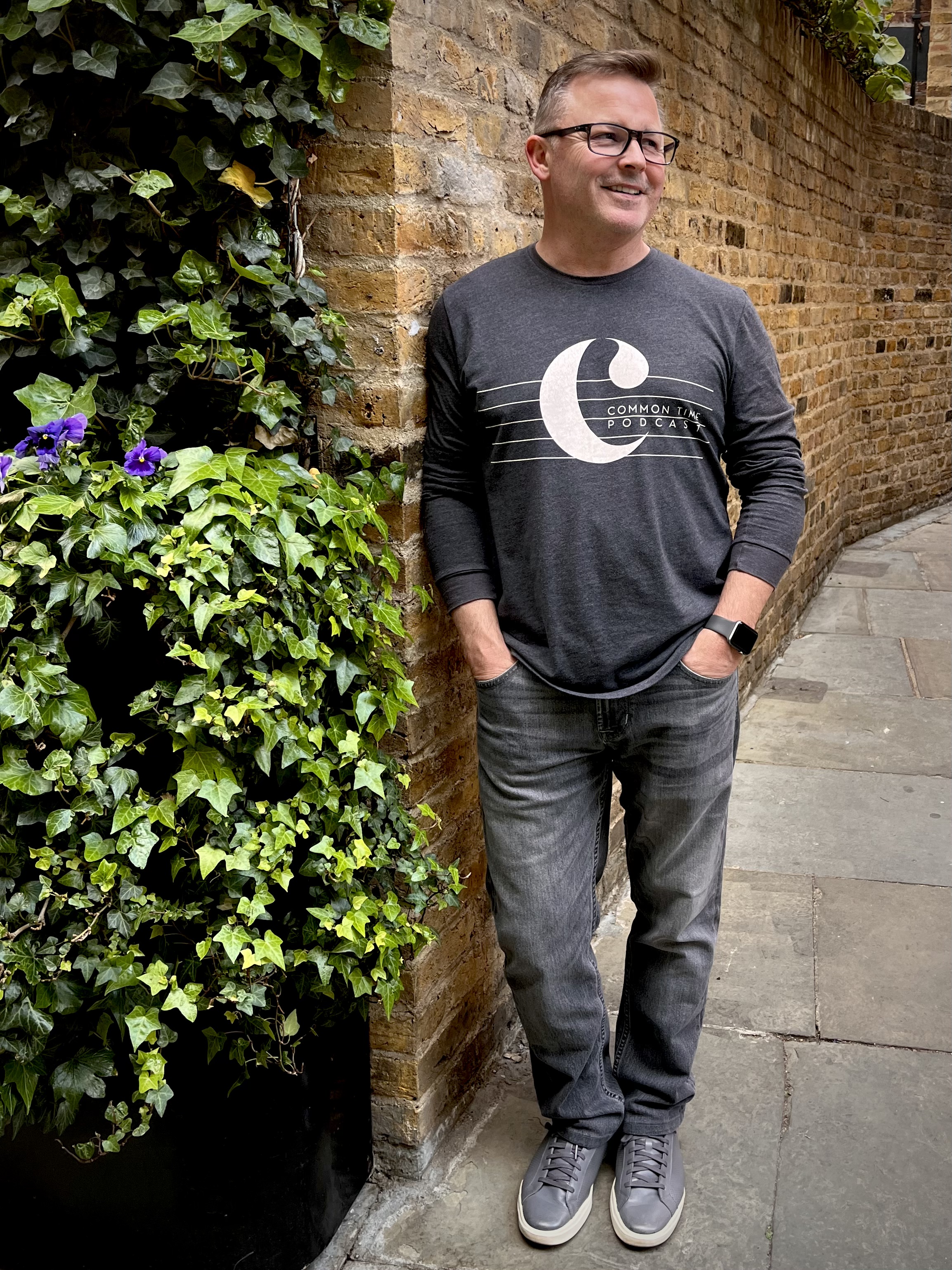
David Clemmer
Co-Host · Conductor & Arts Leader
David Clemmer is a conductor, educator, author, and arts leader whose career has taken him from concert halls in Europe to international school ensembles in the Caribbean, from a nationally televised Fourth of July performance with the Boston Pops to wind band workshops drawing hundreds of educators from thirteen countries across three continents. In a previous life — the one that puzzles his conducting colleagues the most — he spent a year slinging payroll software at Paychex and another year growing a Houston real estate firm from $60M to $160M in sales. He has since returned to music education, where the pay is worse but the Germans invite you to lecture in medieval towns, so it evens out.
He is guided by a central belief — that ensemble music-making, practiced with intention and artistic rigor, is among the most profoundly human things we do — a conviction he arrived at after three decades of evidence-gathering and which he will explain to you at length, unprompted, at any professional gathering where food is being served. You will not be bored. You will miss the shrimp.
His artistic collaborators include Joseph Schwantner, Frank Ticheli, Dana Wilson, David Maslanka, John Corigliano, and Zhou Long — a roster that reads like the answer key to a graduate entrance exam and which Clemmer assembled through a combination of genuine artistry, professional persistence, and the particular brand of conviction that makes very busy composers think fine, yes, alright, but just this once. He has presented at state music educator conferences across the United States and, alongside his co-host, lectured in Austria, at the Yamaha Band Conference Europe, and multiple times at the International Blasmusik Kongress in Ulm, Germany — which sounds made up but is in fact a very serious event attended by very serious people who would like you to know that wind band music is an art form, and they have the lanyards to prove it. More on the co-host shortly.
Clemmer is co-author of The Directed Listening Model: A Rehearsal Guide for Ensemble Musicianship, a pedagogical framework now published, translated, and deployed across universities and secondary schools in twelve countries on five continents — which began as an ambitious goal and has since become an awkward understatement. It forms the curricular backbone of a graduate course at VanderCook College of Music in Chicago, and spawned MaestroMind™ Blueprint: Building With Intention — a four-pillar professional development system whose name contains a trademark symbol, a colon, and the energy of a man who has given a lot of TEDx talks in his imagination. His co-author on the book, incidentally, has actually given one. But we’re getting ahead of ourselves.
In the pageantry arts, Clemmer served as Brass Caption Head for the Santa Clara Vanguard and Boston Crusaders, and as Ensemble Music Instructor for The Cavaliers — during which time the organization won four DCI World Championships and posted a 99.15, the highest recorded score in DCI history at the time, during an undefeated season. A colleague of his was also there. You will meet him in a moment.
Which brings us to the reason you are reading this biography on this particular website. Clemmer co-hosts the Common Time Podcast alongside Dr. John Pasquale — a show about music education that is, against considerable odds, genuinely excellent. It has completed four seasons, earned a top rating on Apple Podcasts, and is now ramping up for what promises to be an exciting fifth — a sentence that would sound like marketing if it weren’t simply true. If you are here, you already know this. Hello.
Alongside his co-host, Clemmer is part of a team building the Certificate in Wind Band Conducting and Pedagogy at the University of Cape Coast in Ghana — the first program of its kind on the African continent. Their virtual workshops have drawn between 500 and 700 participants from thirteen countries across Africa, Europe, and the Middle East. He does all of this from Texas, which, to be clear, is not on the African continent, but has its own distinct challenges.
Clemmer holds a Doctor of Musical Arts from the University of Missouri–Kansas City and a Master of Music from the University of Oklahoma. His principal mentors — Steven D. Davis, Joseph Parisi, William Wakefield, Brian Britt, Ray Lichtenwalter, Rick Bogard, Jim McDaniel, and John Haynie — represent a combined century of wisdom that he has spent his career either honoring faithfully or repackaging under a trademark symbol, depending on who you ask. He is not tall. This has never once stopped him.
* He hated the payroll software year. The payroll software year knew what it did.
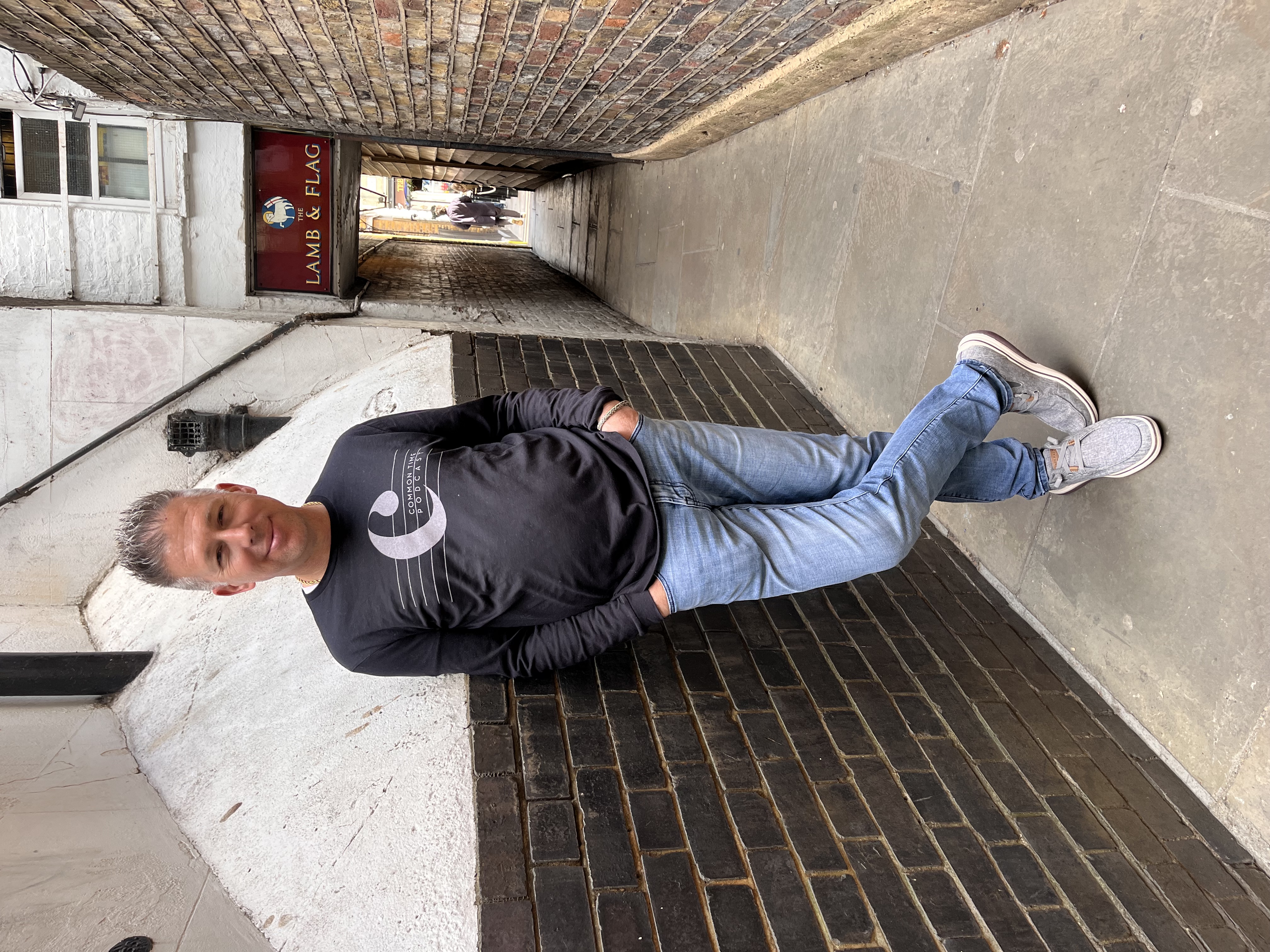
John Pasquale
Co-Host · Director, Michigan Marching Band
If you just read David Clemmer’s biography, some of this will sound familiar. That is not a coincidence. John Pasquale and David Clemmer have been orbiting the same stages, the same podiums, the same improbably named German conferences, and the same pedagogical convictions for the better part of two and a half decades. At some point it made sense to start a podcast. This is that podcast.
Pasquale is the Donald R. Shepherd Professor of Conducting and Director of the Michigan Marching and Athletic Bands at the University of Michigan — a title so long it has its own zip code, and which he has earned many times over. He oversees six ensembles, more than 700 students, and a staff of roughly fifty people. He is also, as of 2023, the Chief Marshal to the University of Michigan, meaning he plans and oversees university ceremonial events — which is exactly the kind of additional responsibility you take on when you apparently have nothing else going on.
Unlike his co-host, Pasquale has not spent a year in real estate or payroll software. He has, however, led the Michigan Marching Band to the Rose Bowl, the Fiesta Bowl, the Orange Bowl, the Peach Bowl, the Citrus Bowl, the College Football National Championship, BOA Grand Nationals, and an NFL Monday Night Football halftime show. Different life choices. Equally defensible.
In the pageantry world, Pasquale was there for the 99.15. Yes, the same 99.15 mentioned in the previous biography. They were both there. The Cavaliers won four World Championships during their overlapping tenure, which — as noted above — is a pattern that did not survive either of their departures intact. Historians will note the correlation without drawing conclusions, because historians are careful like that. This biography is not a historical document.
He is co-author of The Directed Listening Model — yes, the same book — published in English and German and in use across universities and secondary schools worldwide. He has lectured at the International Blasmusik Kongress in Ulm, the Yamaha Bläserklassen Kongress in Schlitz, and the Bund Deutscher Blasmusikverbände Musikakademie in Staufen — the same institutions, the same medieval towns, frequently at the same time as his co-host, which at this point should surprise no one. He has also lectured in China, across the United States, and at TEDxUofM, where he gave a talk titled “Just Spit It Out… The Power of Finding Your Own Voice.” He has a stutter. He gave a TED talk. There is nothing more to say about that except: go watch it.
Pasquale is the driving force behind the Certificate in Wind Band Conducting and Pedagogy at the University of Cape Coast in Ghana. Yes, this is the same program mentioned in the previous biography. He leads it. He does this from Ann Arbor, which, unlike Texas, is at least closer to Germany.
He holds a Doctor of Musical Arts from the University of Oklahoma, where he won the Gail Boyd de Stwolinski Outstanding Graduate Student Award. Twice. He has been a finalist for the University of Michigan Golden Apple Award for Outstanding Instruction three times. He is, by any reasonable measure, extremely good at this. He would probably find that sentence uncomfortable, which is precisely why it’s here.
* He did not have a payroll software year. He remains insufferably unbothered by this.
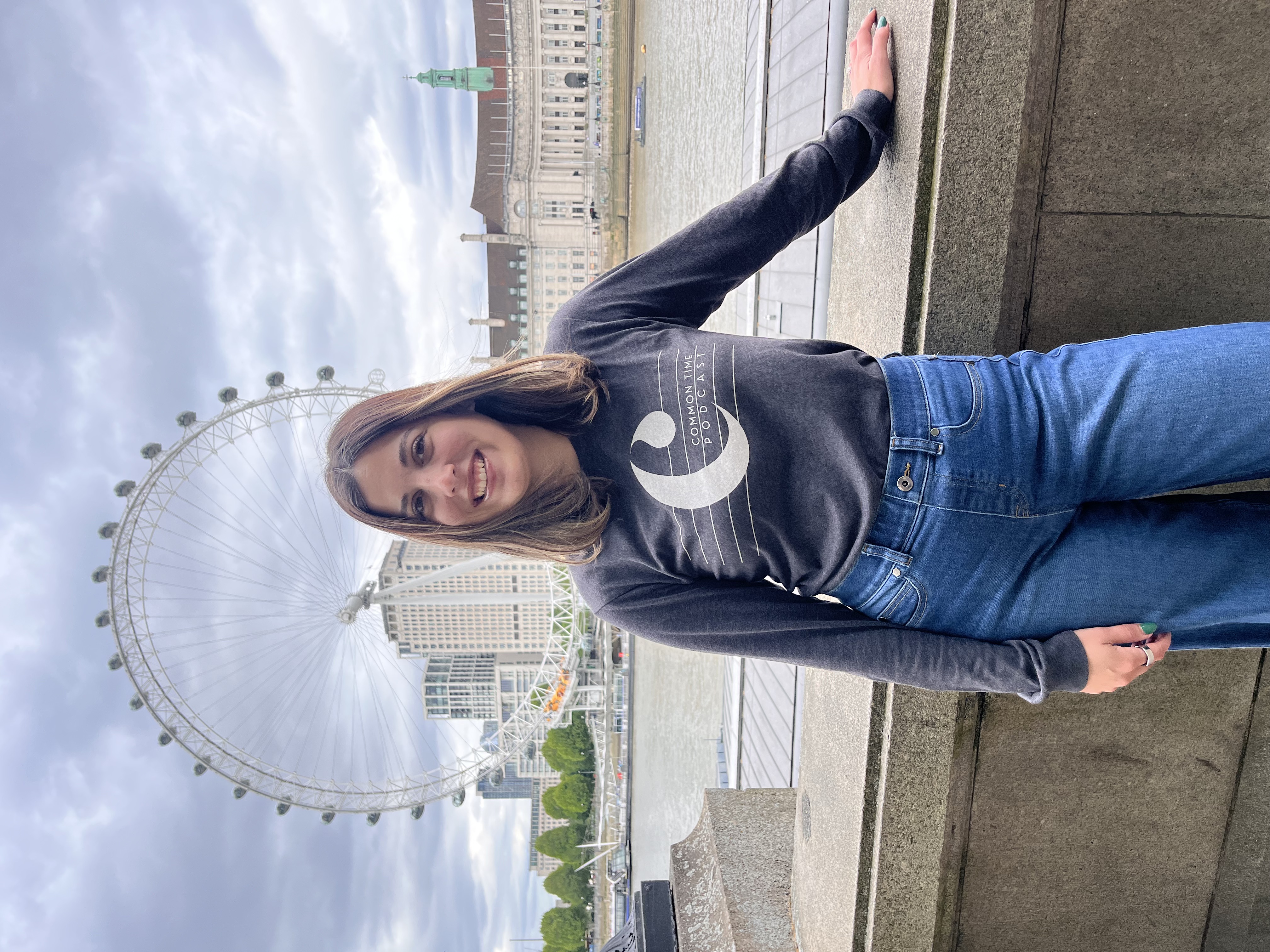
Theresa Clemmer
Producer
Bio Coming Soon ...
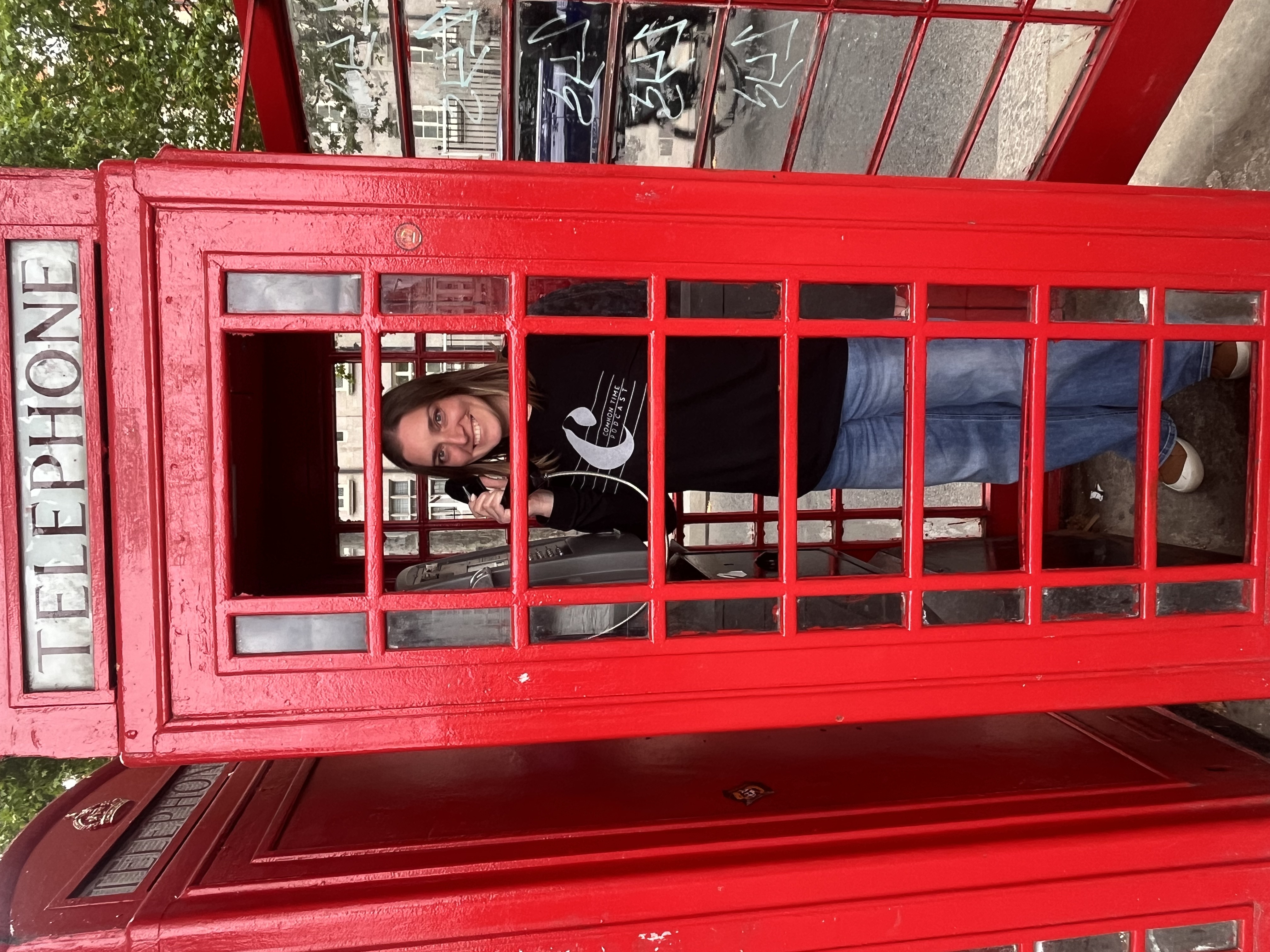
Jessica Pasquale
Producer
Bio Coming Soon ...