Behind the Mic
The Team
Two conductors, educators, and lifelong learners who believe great professional development should be accessible to every music educator.
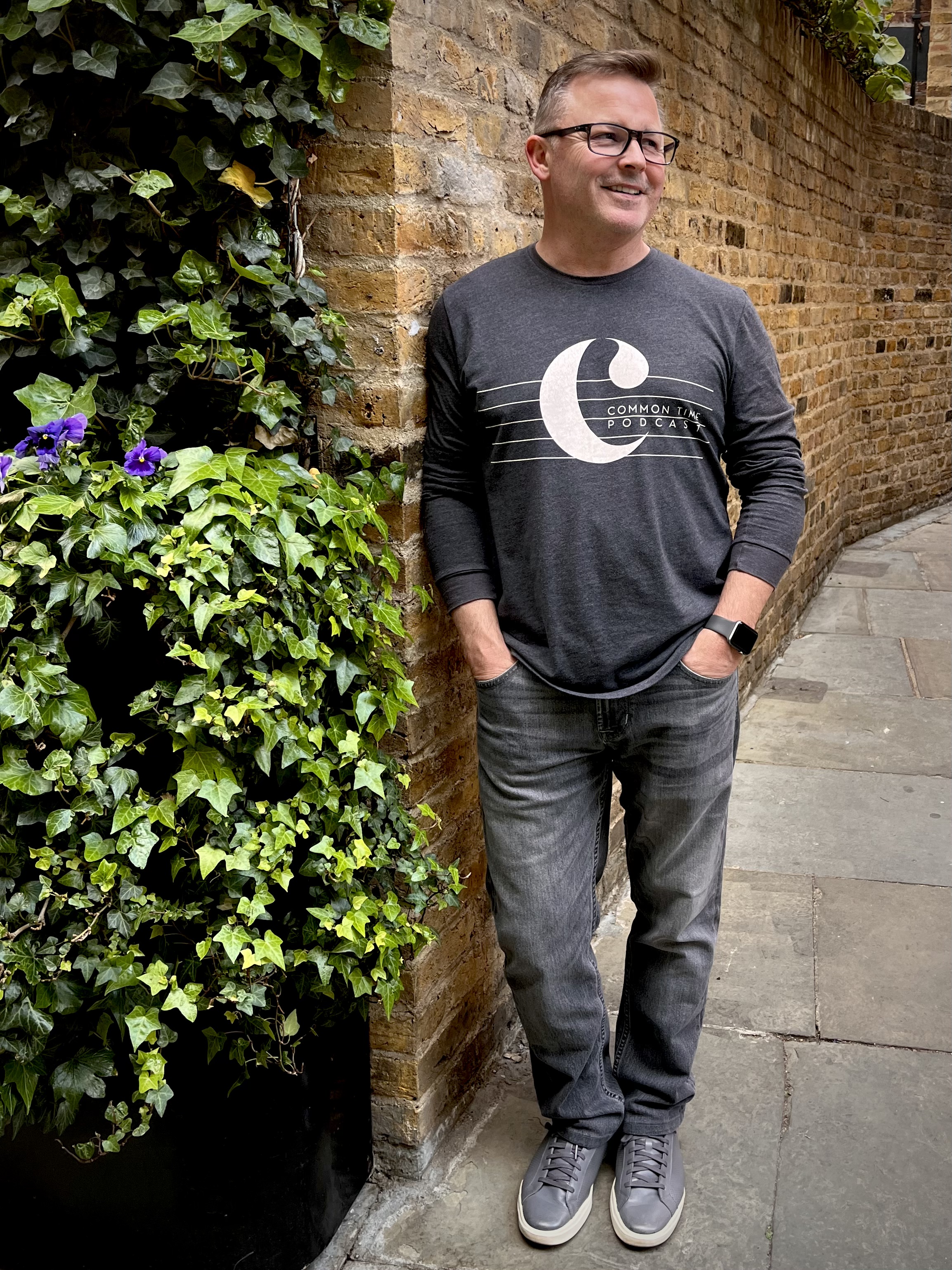
David Clemmer
Co-Host · Executive Director, Amarillo Symphony
David Clemmer is a conductor, educator, author, and the Executive Director of the Amarillo Symphony, where he has traded the podium for a budget spreadsheet — a transition he insists was intentional. His career has taken him from concert halls in Europe to international school ensembles in the Caribbean, from a nationally televised Fourth of July performance with the Boston Pops to wind band workshops drawing hundreds of educators from thirteen countries across three continents. In a previous life — the one that puzzles his conducting colleagues the most — he spent a year slinging payroll software at Paychex and another year growing a Houston real estate firm from $60M to $160M in sales, before returning to music education, where the pay was worse but the Germans invited him to lecture in medieval towns, so it evened out.
He is guided by a central belief — that ensemble music-making, practiced with intention and artistic rigor, is among the most profoundly human things we do — a conviction he arrived at after three decades of evidence-gathering and which he will explain to you at length, unprompted, at any professional gathering where food is being served. You will not be bored. You will miss the shrimp.
His artistic collaborators include Joseph Schwantner, Frank Ticheli, Dana Wilson, David Maslanka, John Corigliano, and Zhou Long — a roster that reads like the answer key to a graduate entrance exam and which Clemmer assembled through a combination of genuine artistry, professional persistence, and the particular brand of conviction that makes very busy composers think fine, yes, alright, but just this once. He has presented at state music educator conferences across the United States and, alongside his co-host, lectured in Austria, at the Yamaha Band Conference Europe, and multiple times at the International Blasmusik Kongress in Ulm, Germany — which sounds made up but is in fact a very serious event attended by very serious people who would like you to know that wind band music is an art form, and they have the lanyards to prove it. More on the co-host shortly.
Clemmer is co-author of The Directed Listening Model: A Rehearsal Guide for Ensemble Musicianship, a pedagogical framework now published, translated, and deployed across universities and secondary schools in twelve countries on five continents — which began as an ambitious goal and has since become an awkward understatement. It forms the curricular backbone of a graduate course at VanderCook College of Music in Chicago, and spawned MaestroMind™ Blueprint: Building With Intention — a four-pillar professional development system whose name contains a trademark symbol, a colon, and the energy of a man who has given a lot of TEDx talks in his imagination. His co-author on the book, incidentally, has actually given one. But we’re getting ahead of ourselves.
In the pageantry arts, Clemmer served as Brass Caption Head for the Santa Clara Vanguard and Boston Crusaders, and as Ensemble Music Instructor for The Cavaliers — during which time the organization won four DCI World Championships and posted a 99.15, the highest recorded score in DCI history at the time, during an undefeated season. A colleague of his was also there. You will meet him in a moment.
Which brings us to the reason you are reading this biography on this particular website. Clemmer co-hosts the Common Time Podcast alongside Dr. John Pasquale — a show about music education that is, against considerable odds, genuinely excellent. It has completed four seasons, earned a top rating on Apple Podcasts, and is now ramping up for what promises to be an exciting fifth — a sentence that would sound like marketing if it weren’t simply true. If you are here, you already know this. Hello.
Alongside his co-host, Clemmer is part of a team building the Certificate in Wind Band Conducting and Pedagogy at the University of Cape Coast in Ghana — the first program of its kind on the African continent. Their virtual workshops have drawn between 500 and 700 participants from thirteen countries across Africa, Europe, and the Middle East. He does all of this from Texas, which, to be clear, is not on the African continent, but has its own distinct challenges.
Clemmer holds a Doctor of Musical Arts from the University of Missouri–Kansas City and a Master of Music from the University of Oklahoma. His principal mentors — Steven D. Davis, Joseph Parisi, William Wakefield, Brian Britt, Ray Lichtenwalter, Rick Bogard, Jim McDaniel, and John Haynie — represent a combined century of wisdom that he has spent his career either honoring faithfully or repackaging under a trademark symbol, depending on who you ask. He is not tall. This has never once stopped him.
* He hated the payroll software year. The payroll software year knows what it did.
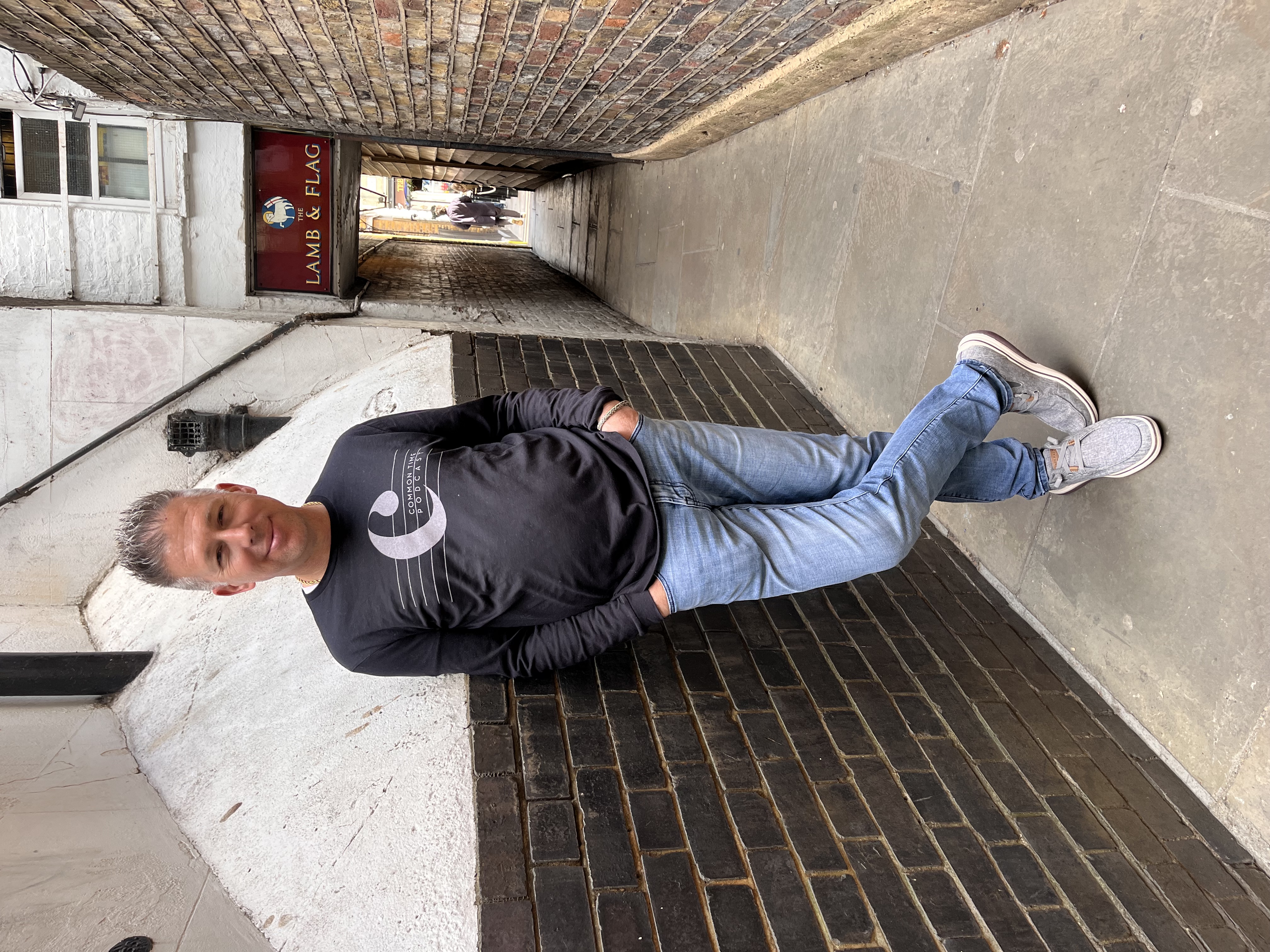
John Pasquale
Co-Host · Director, Michigan Marching Band
If you just read David Clemmer’s biography, some of this will sound familiar. That is not a coincidence. John Pasquale and David Clemmer have been orbiting the same stages, the same podiums, the same improbably named German conferences, and the same pedagogical convictions for the better part of two and a half decades. At some point it made sense to start a podcast. This is that podcast.
Pasquale is the Donald R. Shepherd Professor of Conducting and Director of the Michigan Marching and Athletic Bands at the University of Michigan — a title so long it has its own zip code, and which he has earned many times over. He oversees six ensembles, more than 700 students, and a staff of roughly fifty people. He is also, as of 2023, the Chief Marshal to the University of Michigan, meaning he plans and oversees university ceremonial events — which is exactly the kind of additional responsibility you take on when you apparently have nothing else going on.
Unlike his co-host, Pasquale has not spent a year in real estate or payroll software. He has, however, led the Michigan Marching Band to the Rose Bowl, the Fiesta Bowl, the Orange Bowl, the Peach Bowl, the Citrus Bowl, the College Football National Championship, BOA Grand Nationals, and an NFL Monday Night Football halftime show. Different life choices. Equally defensible.
In the pageantry world, Pasquale was there for the 99.15. Yes, the same 99.15 mentioned in the previous biography. They were both there. The Cavaliers won four World Championships during their overlapping tenure, which — as noted above — is a pattern that did not survive either of their departures intact. Historians will note the correlation without drawing conclusions, because historians are careful like that. This biography is not a historical document.
He is co-author of The Directed Listening Model — yes, the same book — published in English and German and in use across universities and secondary schools worldwide. He has lectured at the International Blasmusik Kongress in Ulm, the Yamaha Bläserklassen Kongress in Schlitz, and the Bund Deutscher Blasmusikverbände Musikakademie in Staufen — the same institutions, the same medieval towns, frequently at the same time as his co-host, which at this point should surprise no one. He has also lectured in China, across the United States, and at TEDxUofM, where he gave a talk titled “Not Despite—Because.” He has a stutter. He gave a TED talk. There is nothing more to say about that except: go watch it.
Pasquale is the driving force behind the Certificate in Wind Band Conducting and Pedagogy at the University of Cape Coast in Ghana. Yes, this is the same program mentioned in the previous biography. He leads it. He does this from Ann Arbor, which, unlike Texas, is at least closer to Germany.
He holds a Doctor of Musical Arts from the University of Oklahoma, where he won the Gail Boyd de Stwolinski Outstanding Graduate Student Award. Twice. He has been a finalist for the University of Michigan Golden Apple Award for Outstanding Instruction three times. He is, by any reasonable measure, extremely good at this. He would probably find that sentence uncomfortable, which is precisely why it’s here.
* He did not have a payroll software year. He remains insufferably unbothered by this.
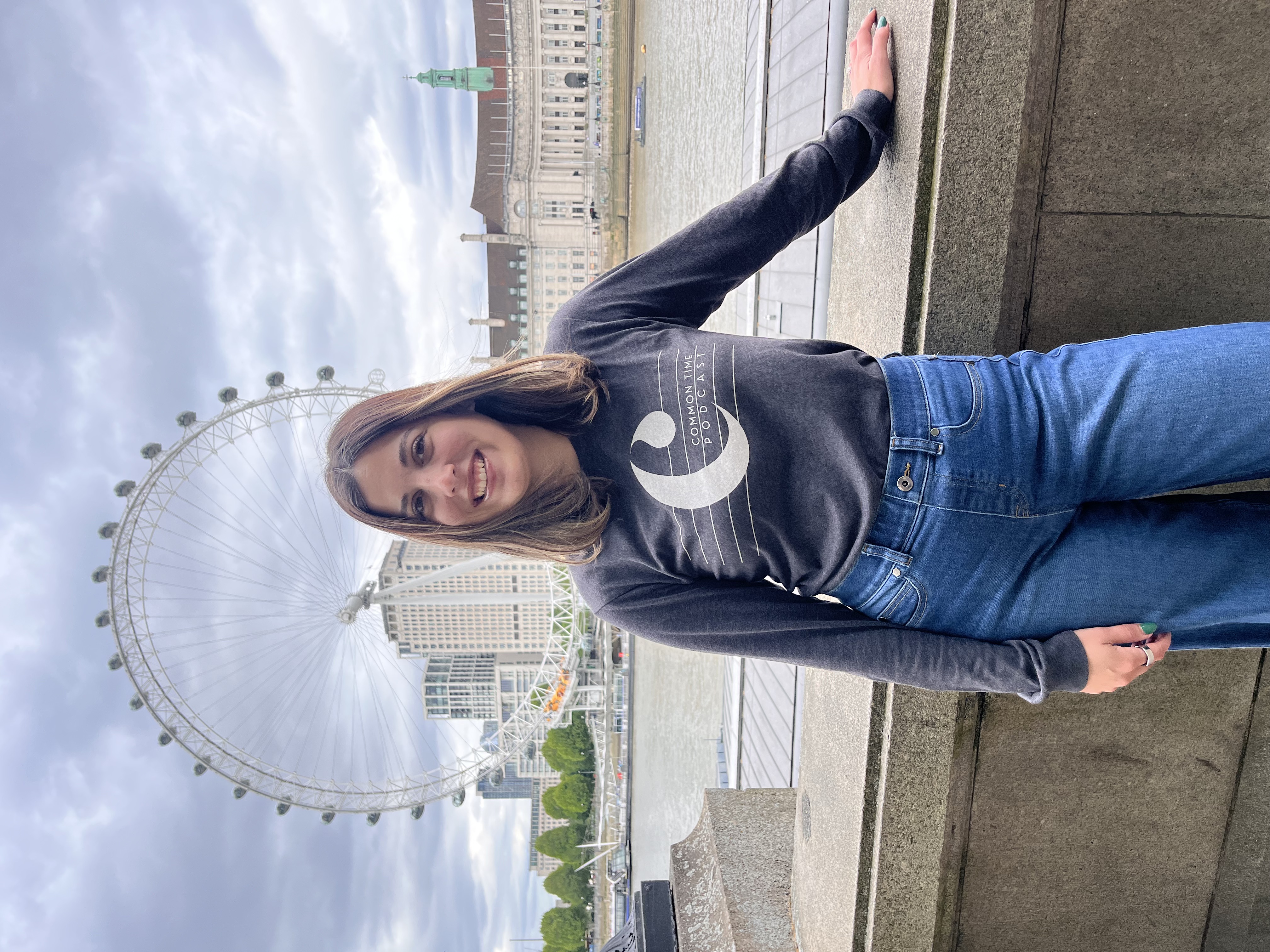
Theresa Clemmer
Producer & Content Manager
Theresa Clemmer is a producer and content manager of the Common Time Podcast — titles that technically cover what she does the way "weather" technically covers a hurricane. She is present for every recording (providing real-time direction to the hosts, albeit with mixed results*), edits every episode, writes every set of show notes, designs every graphic, builds every social post, manages every guest's experience on the platforms, and executes a comprehensive marketing strategy — all while fielding somewhere in the neighborhood of five hundred new ideas per week from her husband, each one marked urgent.
She holds a Bachelor of Music Education from the University of North Texas, where she was a flute player — which means she spent her formative years in one of the most competitive band programs in the country and came out the other side with opinions, standards, and exceptional taste. She then marched one year with the Boston Crusaders Drum and Bugle Corps as Assistant Drum Major, followed by two years as their Tour Manager. This is where she met David. And John. She has never fully explained what she was thinking.
After drum corps she taught high school band at College Park High School in The Woodlands, Texas for four years — a chapter she describes with genuine warmth and zero ambivalence. She loved it. The podcast, she'll tell you, is how she stays connected to that part of her life. After teaching she moved into sales leadership and sales training, where she has been exceptionally successful, and attributes approximately one hundred percent of that success to what music education taught her. She means it. She has the data.
By her own count, Theresa has listened to every episode of Common Time at least twice — once during filming, once during editing, and sometimes a third or fourth time as needed. She is now revisiting older episodes to prep for new projects, which means she has heard certain conversations more times than the hosts themselves. She does not bring this up. Often.
A note on the podcast: David will tell you Common Time was his idea. Theresa has the original notes from the conversation where it was hers. The name, to be fair, was David's. The podcast itself — the specific, actual idea for this podcast — was Theresa's. The record now reflects this. She did not ask us to include this. We included it anyway.
When asked what she is genuinely proud of, she did not list an award or a metric. She said she is proud of how much she has grown as a person in the last fifteen years — that the trophies and accomplishments are great, but they no longer define her the way they once did. She is proud of the life she gets to lead. That answer tells you everything you need to know about why this podcast sounds the way it does.
* One example. Season 4 finale. She was texting the hosts from the producer chair to stop reading her notes out loud on mic. David read every word. Some things cannot be edited in post.

Jessica Pasquale
Producer & Operations Manager
Jessica Pasquale is a producer and operations manager for the Common Time Podcast, which means she is the person who actually makes sure things happen on time — a skill set that is, in this particular operation, in constant demand. She schedules every guest, manages the shared calendar,* writes the show flow document that gives the hosts something resembling a script, and sends follow-up emails to guests once their episodes post. She also quietly maintains the spreadsheet where everyone dumps ideas and suggested guests, keeping it organized in a way that would collapse entirely without her. The stuff nobody sees is keeping the guys focused when the planning meetings go off the rails — a job she shares with Theresa, and one that is apparently never finished.
She started on flute in sixth grade in Denison, Texas — Denison, not Denton, which may explain why she and Theresa are so similar — added piccolo in high school, and played both through college, which is how she met John. She majored in music briefly before concluding, with admirable self-awareness, that she didn't have the patience to teach and wasn't quite going to make it as a performer. She switched to English. Graduating with an English degree in 2008 was, by her own description, roughly equivalent to not having gotten a degree at all. After a brief detour through retail — where she learned a surprising amount about diamonds — she earned a Master of Science in Information from the University of Michigan. She is the only official Wolverine in her household. John is aware of this. It has been noted.
She is a librarian. This explains the organizational precision, the preference for working behind the scenes, and the quiet certainty that if everyone would simply follow the system, things would go more smoothly. She knows enough about music to ask John questions she suspects are, to him, annoying — and not quite enough to be a host. An arrangement she describes as totally fine, and which the podcast probably depends on.
Being married to one of the hosts occasionally feels like being married to both of them — John and David transmit the exact same thought, word for word, simultaneously, via text, from a thousand miles apart, with a regularity that defies reasonable explanation. She and Theresa tend to respond with identical reactions, which either means the four of them are exceptionally well matched or that years of proximity to the same two people has caused a slow and irreversible convergence. She finds this mildly alarming. She has not left.
She couldn’t be more proud of John, David, and Theresa for the time and energy they pour into this podcast. Watching listeners reach out to say thank you is like watching tiny fires catch and spread from person to person, helping make the world a brighter place. That is a genuinely beautiful thing to say, and it belongs in her bio exactly as she said it.
A few things Jessica thinks are worth knowing: John hates mayonnaise and considers butter the spawn of Satan. Jessica loves both and married him anyway, which is either a testament to love or a complete mystery depending on your feelings about condiments. David likes to argue — don’t let him tell you otherwise, and exercise particular caution after bourbon. And Theresa — she returns to this, unprompted, with the calm certainty of someone who has watched the evidence accumulate over time — is a saint.
* John’s calendar is not always current. This has been raised. It continues. It will probably always continue. Jessica has made her peace with this, in the same way one makes peace with weather.
Clinician Services
Bring David & John to your school, district, or conference.
Book David & John as Clinicians →